In my previous posts, I wrote a lot about rhythm, presence, and the philosophy behind the AŽ hive. This time, I want to move closer to practice. Not theory from books, but work shaped through years of living alongside bees—through mistakes, observation, and repeating the same tasks under very different conditions.
For me, the AZ hive is a system that quickly reveals whether you are in tune with natural rhythms and understand the development of a bee colony, or whether you are trying to rush things. And it is in practice where this difference becomes most visible.
How I Begin Every Visit to the Apiary
Before opening any hive, I always stop. Quite literally.
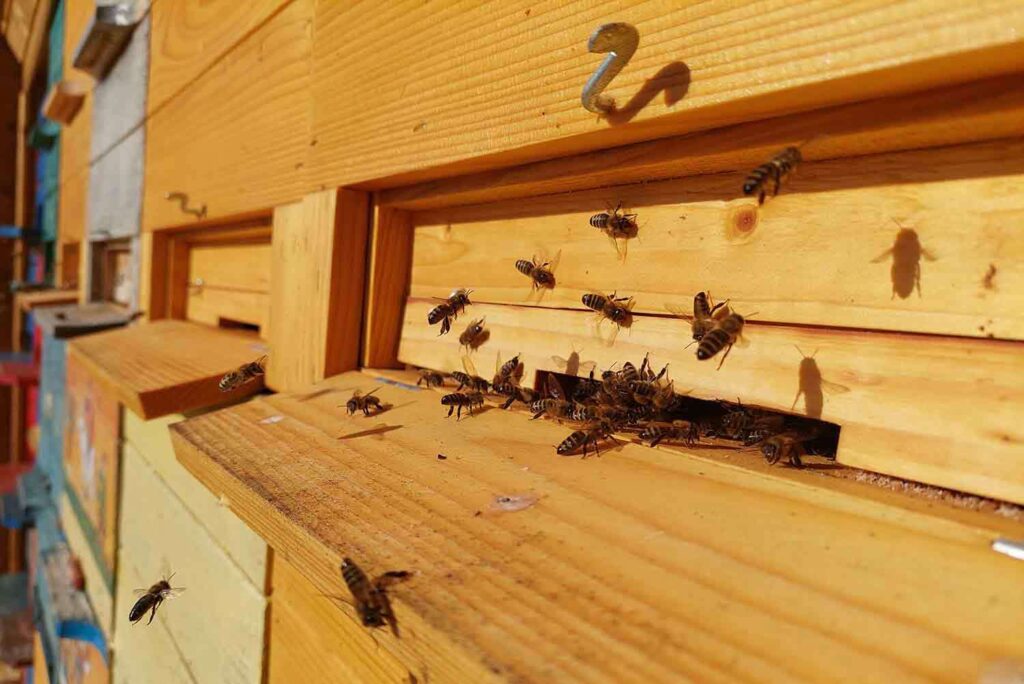
I first observe what is happening in front of the hive: flight activity, traffic intensity, and the behavior of bees at the entrance. This often tells me more than a quick look inside ever could.
Over time, you learn to distinguish between what is “normal” and when “something is not quite right.” If a hive appears calm, steady, and without nervous behavior, intervention is often unnecessary. When needed, I also check the situation through the rear mesh, observing how “full” the hive is and what the bees communicate through their sound.
The AŽ hive makes this possible—it teaches you when not to intervene.
Opening the Hive with Purpose, Not Out of Habit
When I open a hive, I always have a clear intention. I do not open it simply because “it’s time,” but because I want to check something specific: brood condition, space, food reserves, or the general state of the colony.
With the AZ hive, it quickly becomes clear that unnecessary opening and pulling out frames tires the bees—and the beekeeper as well. Fewer interventions, when done thoughtfully, lead to more order and less stress on both sides.
Often, it is enough to slightly separate the frames to confirm the presence of brood, quickly assess food stores, and then close the hive. The work is done.
Working with the Rhythm – Through the Season, Not Against It
One of the greatest strengths of the AZ system is that it forces you to think seasonally. Spring demands a different focus than summer, and autumn something else entirely.
Instead of following a rigid checklist of tasks, I have learned to follow the development of the colony itself. Sometimes that means consciously postponing an intervention. Other times, it means acting sooner than planned. Bee colonies develop at different speeds, and the beekeeper must adapt to that reality.
Common Mistakes I Had to Make Myself
Much of what I now do routinely grew out of mistakes.
Intervening too early. Checking too often. Trying to “manage” the hive instead of observing it. The AZ hive does not punish these mistakes immediately—it responds patiently. And that is precisely why it becomes such a good teacher, gradually instilling calmness and restraint.
If I were starting again today, I would want a simple, practical guide—not a perfect one, but an experiential one.
Why This Year Will Bring More Practical Posts
In the coming months, I will be sharing concrete, practice-based posts tied to specific parts of the year: what I observe, what I do, and what I consciously leave untouched. No idealization, no universal recipes—just insight into a way of working that has proven stable and meaningful over time.
This is knowledge that cannot be learned overnight. It develops through repetition, presence, and time spent alongside the hives.
An E-book as Support at the Beginning
For those who would like a concise and structured introduction to working with AZ hives, I have also prepared an e-book that brings together the basic principles, ways of thinking, and first practical steps in one place.
The e-book serves as a solid orientation—especially for those who want to understand what an AZ hive is, how it developed, and what it means to work with this system.
Over the years, the AZ hive has taught me that beekeeping is not a competition in efficiency, but a practice of observation. The more you rush, the less you see. The more you listen, the less you need to correct.
In the next posts, I will go even deeper into practice—through the seasons, concrete examples, and real situations from the apiary.