I grew up among bees.
For me, the AZ hive was never an invention or a novelty — it was simply the hive.
In our part of Slovenia, it was the natural choice.
Bees lived in wooden bee houses, arranged neatly in rows — sometimes three hives high — safely under the roof, protected from wind, rain, and snow.
That was the world I knew.
Back then, we hardly ever saw any other hive type.
Langstroth or stacked hives were rare curiosities from foreign books.
The AZ hive wasn’t just a design — it was part of the landscape, the rhythm of life, and a reflection of how people worked with nature here.
Working with bees in an AZ hive is a different experience altogether.
You don’t lift boxes or separate layers.
You work quietly from the back of the hive, moving through the frames one by one, almost like turning the pages of a book.
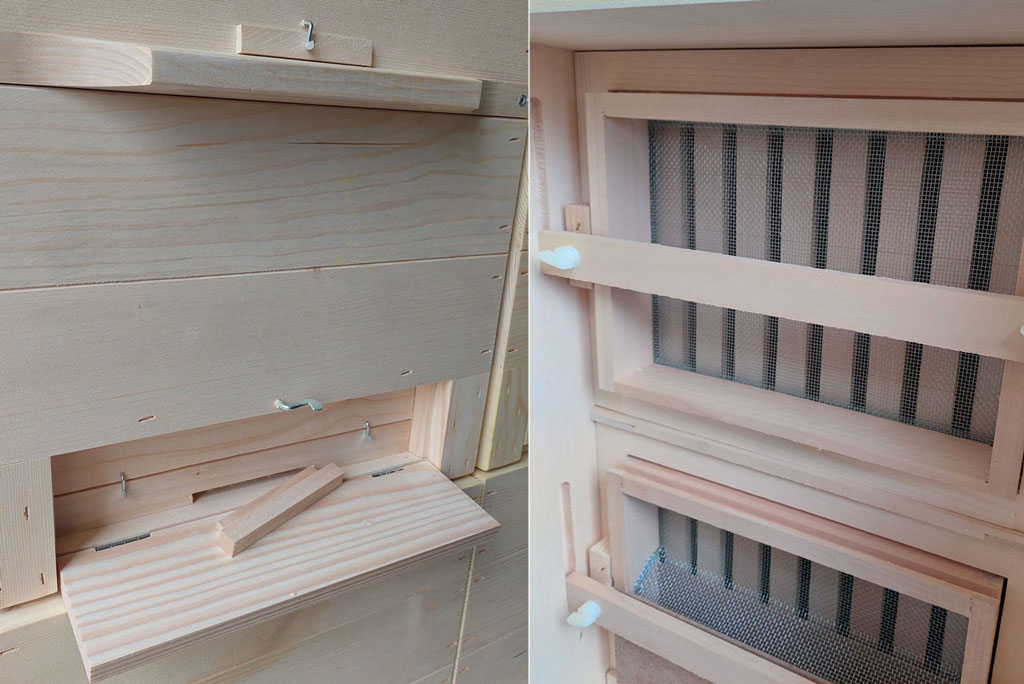
With a gentle puff of smoke through the mesh-covered back window, you let the bees know you’re coming.
They drink a bit of honey, settle on the combs, and keep working calmly.
There’s no cloud of bees rising into the air — just quiet cooperation between beekeeper and colony.
We always approached the hive with care, and only when needed.
There was no habit of constant opening or disturbance.
We performed the essential inspections — early spring, before swarming season, or when we suspected a problem — and otherwise, we simply observed.
Much could be learned just by watching the bees at the entrance:
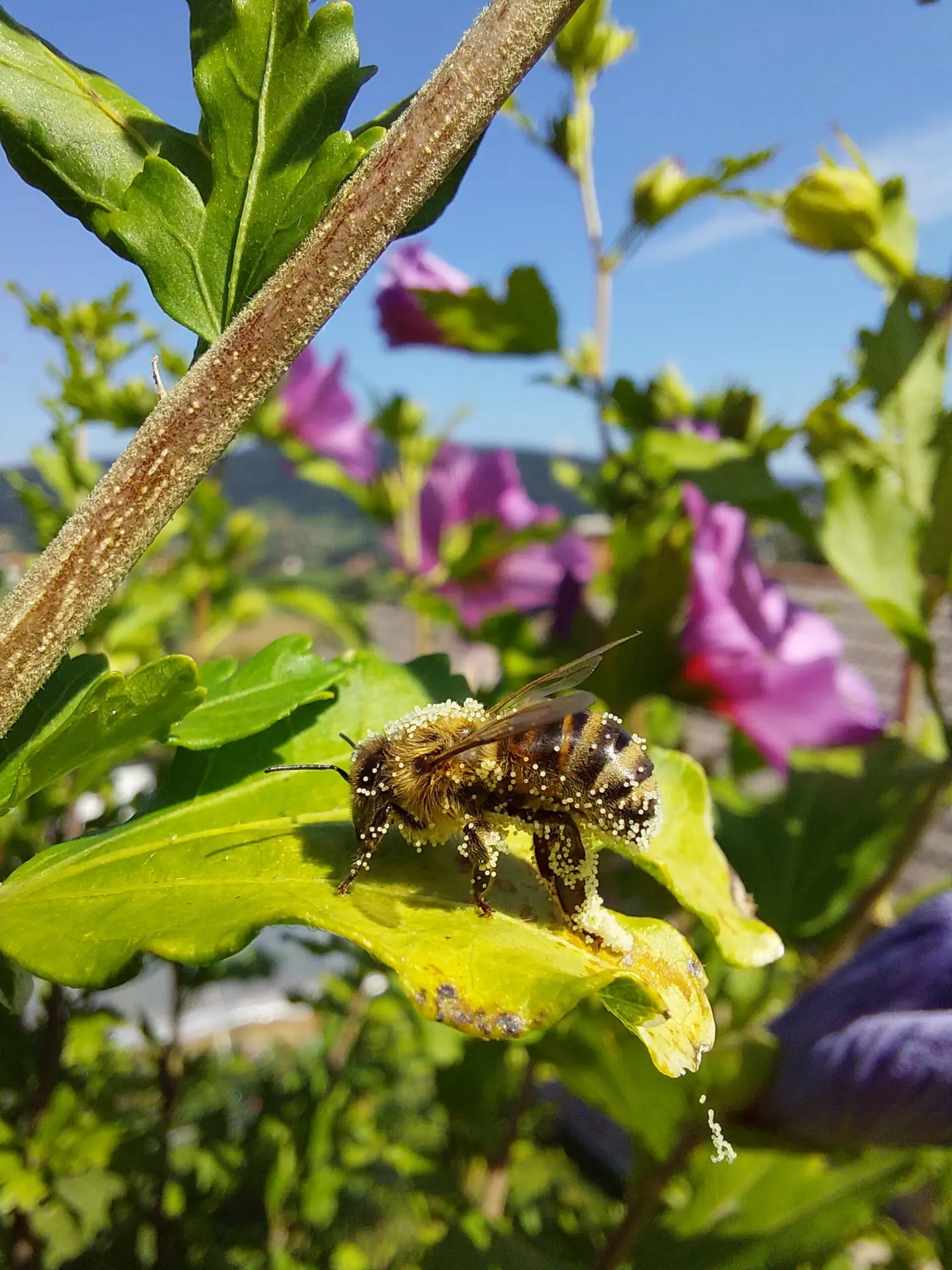
if they carried pollen, the brood was present;
if they flew evenly and steadily, the forage was good;
if they hesitated, something had changed in the hive’s inner rhythm.
Even through the small rear mesh window, you could shine a light and see how many “streets” of bees were active.
If the back was covered with bees so thick that you could barely see between the frames, you knew the colony was strong and would soon need more space.
Often, there was no need to open the hive at all.
Observation alone told most of the story.
When we did open it, it was simple: just one or two frames were enough to understand the colony’s condition — the food reserves, the brood pattern, how the queen was laying, whether they were building new comb or drone cells.
The AZ hive makes it easy to read all of this without heavy lifting, without chaos, and without rushing.
From the Kranjič to the AZ – A Quiet Revolution in Slovenian Beekeeping
Before the AZ hive, Slovenian beekeepers used traditional Kranjič hives — simple wooden boxes without movable frames.
Inside, bees built their comb freely from the top, creating natural structures that were destroyed at harvest time.
To extract honey, the beekeeper had to cut out the entire comb and press it, destroying brood and wax.
The bees had to rebuild everything, which meant enormous effort and energy loss after every harvest.
This changed with the introduction of movable-frame hives, first inspired by European innovations in the mid-19th century.
They allowed the beekeeper to inspect and manage colonies without destroying the comb, bringing a more sustainable and respectful approach to the work.
At the turn of the 20th century, Simon Alberti, a beekeeper from Trieste, developed a vertical hive with rear access — a design that made inspections easier and more comfortable.
Soon after, Anton Žnideršič from Ilirska Bistrica refined Alberti’s idea.
He standardized the frame size, improved the ventilation system, and designed a version perfectly suited for the Slovenian climate and bee houses.
This collaboration between Alberti and Žnideršič led to what we now know as the AŽ (Alberti–Žnideršič) hive.
The AZ hive was not created to replace other hives, but to harmonize with the way Slovenians had always worked — patiently, carefully, and in rhythm with nature.
It brought precision to tradition and made beekeeping more sustainable in the European sense: less lifting, more observation, and year-round shelter for both the bees and the beekeeper.
A Way of Thinking
To me, the AZ hive represents more than craftsmanship.
It’s a way of thinking — one that values rhythm, observation, and humility.
It reminds us that beekeeping isn’t about control or constant interference, but about balance.
Nature gives in waves — some years are generous, others quiet — yet over time, everything evens out.
Working with AZ hives means learning to move within that rhythm, not against it.
Buzz. Run. Repeat.
A rhythm for beekeeping — and for life.